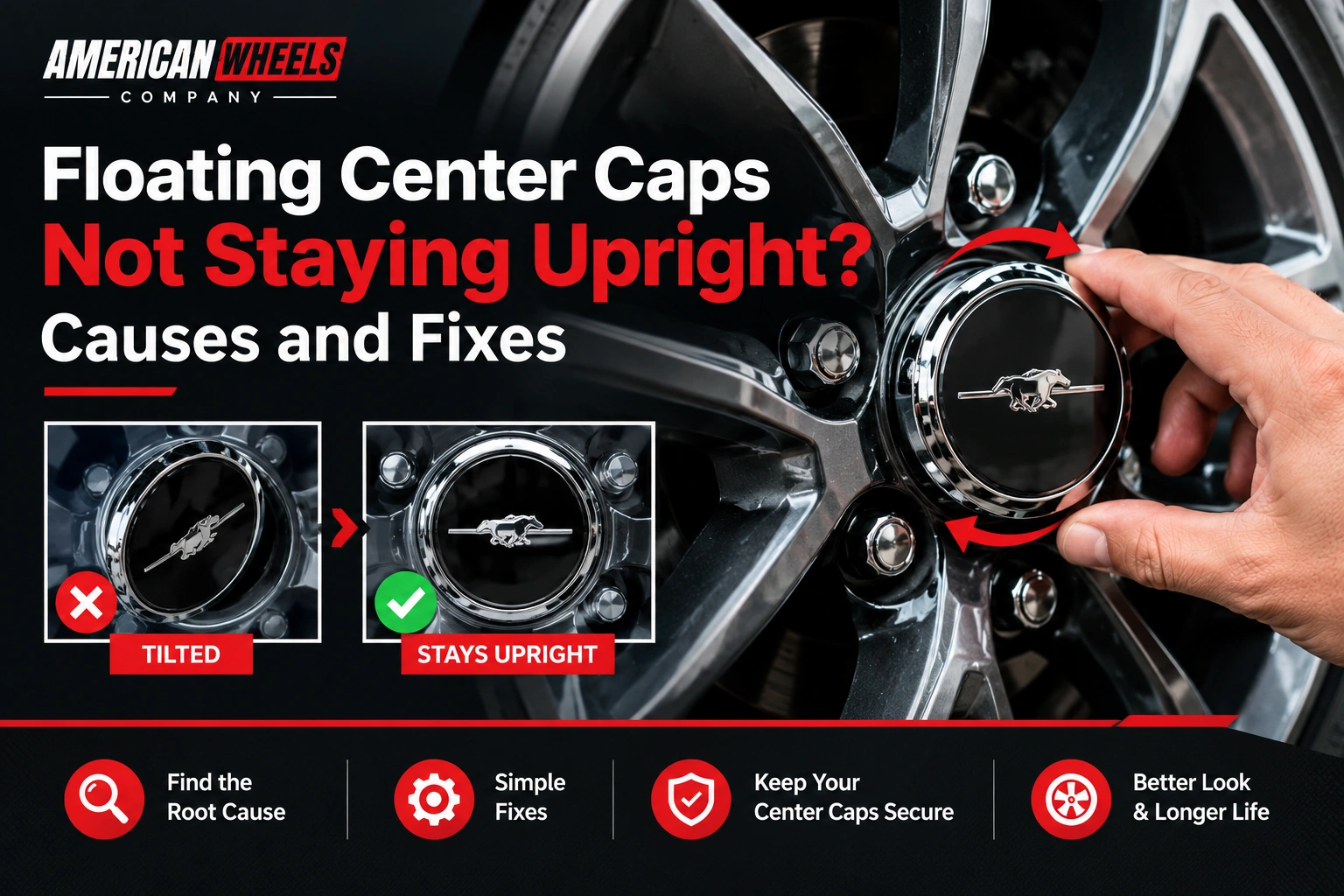
Floating center caps not staying upright usually point to a problem with the self-leveling mechanism, dirt around moving parts, poor fitment, or damage inside the cap. First, check whether the cap is firmly attached to the wheel. Then inspect it for dirt or visible damage. If cleaning and fitment checks do not help, follow the maker’s repair advice or replace the cap.
A floating center cap should keep its logo close to the correct upright position while the wheel turns. If the logo stays tilted, gets stuck, or no longer levels itself, do not assume the whole wheel is the problem. The key is to find out whether the issue is inside the floating mechanism or with the way the cap fits the wheel.
At American Wheels Company, choosing the right cap for your wheel is an important first step. Here is how to check common problems and decide what to do next.
Why Are My Floating Center Caps Not Staying Upright?
A floating center cap may stop working as expected because of one or more of these issues:
Dirt or brake dust: Debris around the cap may affect movement.
A sticking mechanism: The weighted or self-leveling part may no longer move as designed.
Incorrect fitment: The cap may be too tight or may not have enough clearance.
Damaged retaining clips: The cap may sit unevenly or move in the wheel.
Internal wear or damage: The self-leveling parts may need professional inspection or replacement.
These problems do not all need the same fix. A logo that stays tilted is different from a cap that is loose or about to come out of the wheel.
If the cap feels loose, sits crooked, or appears to be coming out, avoid driving until its fit and retention have been checked. A cap that comes off can become a road hazard.
How Do Floating Center Caps Keep the Logo Upright?
Floating center caps are designed to keep the emblem facing the right way while the wheel rotates. Many designs use a weighted section and a moving mechanism that lets the outer wheel turn around the logo face.
The exact design varies by product. Some caps have a sealed assembly, while others are part of a model-specific conversion kit. Do not assume that every floating cap uses the same parts or can be taken apart for repair.
How the self-leveling mechanism works
As the wheel turns, the floating section is designed to respond to gravity and remain close to an upright position. This helps the logo stay readable instead of rotating with the wheel.
For example, the wheel may turn while the logo remains mostly level. This is the main feature that separates a floating center cap from a standard center cap.
A small amount of movement does not always mean the cap is broken. Acceleration, braking, road bumps, and vibration can cause the logo to shift for a short time.
However, the logo should not remain stuck at a strong angle if the cap is working as intended. If it repeatedly stays sideways or upside down, inspect the cap and check the product maker’s instructions.
Common Causes of Floating Center Caps Not Working
1. Dirt or brake dust around the cap
Brake dust, road grime, and dried cleaning products can build up around the cap. Dirt on the outer surface may also hide damage or make it harder to see whether the cap is sitting evenly.
What to do: Clean the outside of the cap and the area around its edge. Use a mild, pH-neutral cleaner, a soft brush, and a clean microfiber cloth. Avoid rough pads and strong chemicals that may damage the finish.
Do not spray a pressure washer directly at the cap’s seams. High-pressure water may force moisture into areas that are not designed for it.
A floating center cap may stop leveling if an internal part sticks, wears out, or gets damaged. Signs can include a logo that stays at an angle, movement that seems uneven, or a new rattle from the cap.
Do not force the logo to turn or try to make the mechanism move by pushing hard on it. Some units are sealed and are not designed for home repair.
What to do: Check the outside for cracks, dents, or signs of impact. If the cap is clean but still does not level, check the manufacturer’s repair guidance. A damaged or sealed unit may need replacement rather than cleaning.
3. Incorrect fit or not enough clearance
A cap can look correct from the front but still be the wrong fit for the wheel. The outer face diameter alone does not confirm compatibility. Insertion diameter, clip design, cap depth, wheel shape, and clearance can also matter.
A cap that fits too tightly may not move as intended. A cap that is too loose may not stay safely attached.
A floating center cap fitment troubleshooting guide describes how fit that is too tight or too loose can cause problems. Its suggested modifications are specific to its products, so do not grind, cut, or bend your cap’s clips unless its manufacturer confirms that this is safe.
What to do: Check the cap’s part number and fitment details against the wheel. If the cap was recently installed, ask the installer or seller to confirm that it is the correct model.
4. Loose or damaged retaining clips
The retaining clips or hooks hold many center caps in place. If a clip breaks, bends, or fails to engage, the cap may sit crooked or move in the wheel.
This is a retention problem, not just a self-leveling problem.
A 2024 technical bulletin on wheel center cap installation notes that attachment fingers or hooks can be damaged if a cap is not installed squarely. The bulletin concerns a specific vehicle-service issue, but it highlights why correct installation matters.
What to do: With the vehicle parked safely, look for a visible gap, a crooked fit, or signs of a broken clip. Do not keep driving if the cap feels loose. Have the cap and wheel checked, and replace damaged retention parts with compatible ones.
5. Water or internal wear
Rain and normal washing do not automatically mean a floating cap is damaged. However, moisture entering a unit that is not sealed for it, or wear inside the mechanism, may affect how it moves.
If the problem began after a wash, check for dirt and visible damage first. Do not assume water is the cause without further inspection.
What to do: Dry the outside with a microfiber cloth and inspect the cap. Do not open a sealed unit or add oil, grease, or other lubricant unless the manufacturer specifically recommends it. The wrong product may affect internal parts or damage the finish.
How to Fix Floating Center Caps That Won’t Stay Upright
Use these checks in order. They help you separate simple dirt or fitment problems from damage that needs repair.
Step 1: Check whether the cap is secure
Park on a level surface, switch off the vehicle, and let the wheels cool. Look at the cap from several angles.
Check for:
A visible gap between the cap and wheel
A cap that sits crooked
Cracks or damage around the outer edge
Missing or broken retaining clips, if visible
A cap that appears to be coming out of its opening
Do not pull or pry the cap off just to test it. Use the correct removal method for that wheel and cap.
If the cap is loose or does not sit correctly, have its fit checked before driving.
Step 2: Clean the cap safely
If the cap is secure and has no obvious damage, clean the outer face and edge.
Use a mild, pH-neutral cleaner suitable for the cap’s finish.
Loosen surface dirt with a soft brush.
Wipe the face with a clean microfiber cloth.
Rinse gently if the product instructions allow it.
Dry the surface and inspect it again.
Avoid abrasive cleaners, metal tools, and strong pressure aimed at the seams. Cleaning may help when dirt is the problem, but it will not fix a worn or broken internal mechanism.
Step 3: Look for signs of sticking or damage
After cleaning, check whether the logo still stays tilted or appears stuck. Listen for a new rattle and look for cracks, impact marks, or other visible damage.
Do not force the logo to spin. Floating caps use different designs, so there is no single hand-test that applies to every model. If you are unsure how the mechanism should move, check the product instructions or ask the seller.
If the cap remains stuck after basic cleaning, it may need specialist inspection or replacement.
Step 4: Confirm the cap fits the wheel
If the problem started after fitting a new cap or changing wheels, check compatibility before trying anything else.
Confirm these details:
What to check
Why it matters
Cap part number
Helps confirm the intended application
Insertion diameter
The part that fits into the wheel opening must match
Retaining clips
The clips must match the wheel’s design
Cap depth
The cap needs the correct space behind the face
Internal clearance
Nearby wheel or hub parts must not interfere with the mechanism
Do not choose a replacement based only on the logo or front-face measurement. If the cap is too tight, too loose, or lacks clearance, ask the manufacturer or a qualified wheel specialist for the correct solution.
Step 5: Follow the manufacturer’s repair advice
If cleaning and fitment checks do not solve the issue, do not dismantle the cap without guidance. Some floating caps are sealed, and a home repair may damage parts that are not sold separately.
Ask the seller or manufacturer whether the cap can be serviced. Share the part number, wheel model, and a clear photo of the problem if possible.
If the mechanism is damaged and the unit is not serviceable, replacement is often the safer option.
When Should You Replace a Floating Center Cap?
Replacement may be the right choice when:
The self-leveling mechanism remains stuck after safe cleaning.
The cap has cracks or impact damage.
Retaining clips are broken or no longer hold the cap securely.
The cap is the wrong size or design for the wheel.
The manufacturer confirms that the internal mechanism cannot be repaired.
Before ordering, match the replacement to your wheel and existing cap. Check the part number, fitment details, insertion size, clip design, and clearance requirements.
A few simple habits can help keep floating caps in good condition.
Clean them gently: Use suitable cleaner and a soft cloth instead of abrasive tools.
Avoid pressure at the seams: Do not aim a pressure washer directly at the cap’s edges.
Check after wheel service: Make sure each cap sits squarely and securely after tire work.
Use the correct fitment: Match the cap to the wheel instead of relying on appearance alone.
Do not force the mechanism: Avoid pushing, twisting, or prying parts that are not designed for manual adjustment.
Act on new rattles or looseness: Inspect a cap if it suddenly moves, sits crooked, or no longer stays attached.
If a shop removes your wheels or center caps, ask the technician to reinstall them correctly and check that they are secure before you leave.
Final Verdict
When floating center caps are not staying upright, start with the basics: check that the cap is secure, clean its exterior gently, and look for signs of poor fit or damage. Do not force the mechanism, grind the clips, or open a sealed unit without the maker’s approval.
If the logo still stays tilted, have the cap checked and confirm the correct fitment before replacing it. The right cap and proper installation help protect the wheel’s appearance and keep the center cap securely in place.
FAQs About Floating Center Caps Not Staying Upright
Why is my floating center cap logo upside down?
The self-leveling mechanism may be sticking, worn, or damaged. Dirt or incorrect fitment can also affect movement. Check the cap for visible damage and clean its exterior safely. If the logo stays upside down, follow the manufacturer’s inspection or replacement advice.
Why does my floating center cap get stuck?
Dirt, poor clearance, or a problem inside the mechanism may stop the cap from leveling. Check for grime and fitment issues first. Do not force the logo to move or dismantle a sealed cap.
Can dirt stop a floating center cap from working?
Dirt around the cap may affect its movement or hide a fitment problem. Gentle cleaning can help if surface contamination is the cause. It will not repair worn parts, broken clips, or internal damage.
Should a floating center cap spin freely by hand?
Not always. Designs differ, and some should not be forced or tested by hand. Follow the instructions for your exact model or ask the manufacturer how to check its movement safely.
Can I repair a floating center cap bearing?
That depends on the cap’s design. Some units are sealed or are not intended for home repair. Check with the manufacturer before opening the cap or adding lubricant. If the mechanism is not serviceable, replacement may be needed.
Why does my floating center cap work when parked but not while driving?
The mechanism may respond differently when the wheel is moving, or vibration and clearance issues may affect its performance. If the logo repeatedly stays tilted while driving, have the cap and its fitment inspected rather than assuming the behavior is normal.
How do I know if a floating center cap needs replacement?
Look for a mechanism that remains stuck, visible cracks, broken retaining clips, a loose fit, or repeated failure after cleaning. If the cap cannot be secured safely or the maker says the mechanism is not repairable, replace it with a compatible model.