
Boat Trailer Wheel Center Caps: Sizes, Materials and Corrosion Tips

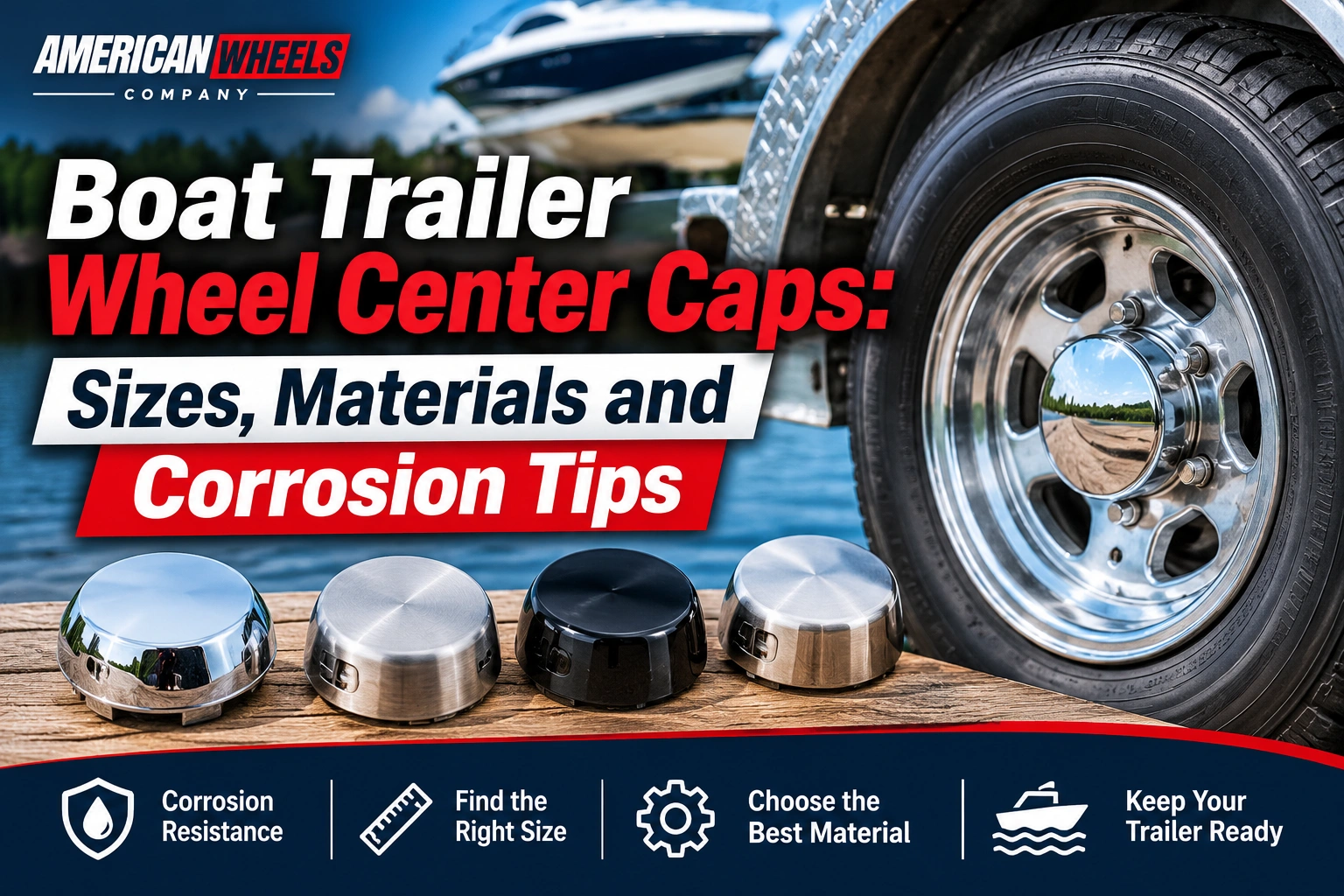
Boat trailer wheel center caps help cover the center opening of your trailer wheels and give them a clean, finished look. If you use your trailer near saltwater, choosing the right replacement also matters. You need a cap that fits your wheel, uses a suitable material, and can handle regular exposure to water and road grime.
The wrong size can come loose, rattle, or fail to sit flush. A cap that does not suit your wheel can also waste your money. Before buying, check the wheel opening, cap depth, mounting style, and material.
At American Wheels Company, you can explore wheel center caps for different wheel styles and sizes. This guide will help you compare boat trailer center cap options and choose a replacement with more confidence.
Why Do Boat Trailer Wheels Need Center Caps?
A wheel center cap covers the center opening of a wheel. It gives the wheel a finished appearance and helps keep dirt and road debris away from the visible center area.
Boat trailer wheels face extra challenges because they are often exposed to water, mud, sand, and road salt. Saltwater use can also increase corrosion on nearby metal parts.
A well-fitted center cap can help keep the wheel looking clean. However, a decorative wheel center cap is not the same as a hub dust cap or bearing protector.
Important difference: A wheel center cap is usually a decorative cover fitted to the wheel. A hub dust cap or bearing protector fits into the hub and helps protect the wheel bearings. If you need to protect or service your bearings, buy the correct hub component rather than using a decorative center cap as a substitute.
How to Choose the Right Boat Trailer Wheel Center Caps
Before looking at materials or styles, make sure the replacement cap matches your wheel. The trailer brand alone is not enough to confirm fitment.
Check these details before ordering:
- Wheel opening: Measure the opening where the cap will fit.
- Outside diameter: Check the widest part of the cap.
- Insertion diameter: Measure the section that enters the wheel.
- Cap depth: Make sure the cap has enough clearance behind the wheel.
- Mounting style: Compare the clips, tabs, or push-through design.
- Wheel type: Confirm whether the wheel is steel, aluminum, factory, or aftermarket.
- Original part number: Use it when available to help find a matching replacement.
Measure the Wheel Opening Before Buying
The best way to avoid a wrong-size order is to measure the wheel itself.
Follow these steps:
- Remove the old center cap carefully, if one is fitted.
- Clean dirt from the wheel opening.
- Measure the opening across its widest point.
- Check the insertion area where the new cap will sit.
- Measure the available depth behind the opening.
- Record the measurements and compare them with the product specifications.
Use a digital caliper when possible. A ruler may not give an accurate result when the opening is close to a common size.
Also, do not confuse the cap’s outside diameter with its pilot or insertion diameter. These measurements describe different parts of the cap.
For a trailer wheel with a bearing protector or other hub component behind it, check the available depth too. A cap may have the correct diameter but still not have enough clearance. etrailer’s center cap fitment guidance explains why measuring the space behind the wheel matters when a cap must clear a bearing protector.
Common Boat Trailer Wheel Center Cap Sizes
Trailer wheel center caps come in different sizes and designs. Some products are listed by pilot diameter, while others show the outside diameter or another measurement.
You may see sizes such as 3.19 inches and 4.25 inches in trailer wheel cap listings. These are examples, not universal sizes for every boat trailer.
| Measurement or size | What it tells you | What to check |
| 3.19-inch pilot | A listed fitment size for certain trailer wheels | Confirm the wheel opening and cap design |
| 4.25-inch pilot | A larger listed fitment size | Check the exact wheel measurement |
| Outside diameter | The width across the cap’s outer edge | Compare with the product drawing |
| Insertion diameter | The part that enters the wheel | Match it to the wheel opening |
| Cap depth | How far the cap extends behind the wheel | Check clearance around the hub |
For example, etrailer’s 3.19-inch trailer center cap fitment information shows that cap depth can matter when a wheel has a bearing protector behind it.
Never order based only on the wheel diameter, such as 14-inch or 15-inch. Two wheels with the same overall diameter can use different center cap openings.
Best Materials for Boat Trailer Wheel Center Caps
Material is an important buying factor, especially if your trailer is used near the coast. Water, salt, and road debris can affect exposed metal parts over time.
Here are some common material options to compare.
Stainless Steel Center Caps
Stainless steel is a popular choice for parts that need good corrosion resistance. It can be useful for trailers exposed to wet conditions, but the exact grade and product design matter.
Do not assume that every stainless steel cap is rustproof. Salt exposure, surface damage, trapped moisture, and contact with other metals can still cause corrosion.
If you choose stainless steel, check the product specifications and care instructions.
Chrome-Plated Center Caps
Chrome-plated caps offer a bright, polished appearance. They can be a good choice when you want a clean finish that matches chrome wheels or other trailer accessories.
However, chrome plating can wear or become damaged. If water reaches the material beneath the plating, corrosion may develop.
Inspect the surface for peeling, cracks, and chips, especially if the trailer is used often in saltwater.
Aluminum Center Caps
Aluminum caps are lightweight and do not develop red rust like ordinary steel. They can work well with some wheel designs.
However, aluminum can still corrode. Contact with dissimilar metals in a wet or salty environment may cause galvanic corrosion under the right conditions.
For more detail, Mercury Marine’s guide to galvanic corrosion explains how dissimilar metals and conductive water can contribute to corrosion.
Plastic Center Caps
Plastic caps do not rust and are often available in simple designs. They may suit owners who want a basic cover without a polished metal finish.
Still, plastic can become brittle from age, sunlight, heat, or impact. Check the retaining clips and rear mounting area before buying.
Which Material Should You Choose?
The best material depends on your trailer use, wheel style, budget, and maintenance routine.
| Material | Main benefit | What to consider |
| Stainless steel | Good corrosion resistance when the correct grade is used | Grade and maintenance still matter |
| Chrome-plated metal | Bright, polished finish | Plating can wear or become damaged |
| Aluminum | Lightweight and no red rust | Can experience other forms of corrosion |
| Plastic | No metal rust and often a simple design | Can become brittle or crack |
For frequent saltwater use, compare the material grade, finish, and manufacturer’s care instructions rather than relying on words such as “marine grade” or “rustproof” alone.
How to Protect Boat Trailer Wheel Center Caps from Corrosion
Even a suitable replacement cap needs proper care. Salt and moisture can collect around the wheel and leave deposits on exposed surfaces.
Use these simple steps to protect your trailer accessories.
Rinse After Saltwater Use
After launching or retrieving your boat in saltwater, rinse the trailer with fresh water. Pay attention to the wheels, hubs, axle, and other exposed hardware.
This helps remove salt deposits before they remain on the surfaces for long periods. West Marine’s trailer maintenance guidance also recommends fresh-water rinsing after saltwater use.
Check for Surface Damage
Inspect your center caps for:
- Peeling chrome or damaged coatings.
- Rust spots or discoloration.
- Cracks around the mounting area.
- Loose clips or retaining tabs.
- Water or dirt trapped behind the cap.
Replace a cap if its mounting area is damaged or it no longer fits securely.
Avoid Trapped Moisture
Dirt and water can collect around the back of a cap. Clean the area when the cap is removed for inspection, and make sure the wheel and cap are dry before refitting.
Do not block drainage areas or add sealants unless the wheel or cap manufacturer specifically recommends them.
Check Contact Between Different Metals
Some corrosion problems involve more than the cap itself. When different metals touch in the presence of saltwater, galvanic corrosion may occur.
This is especially important around aluminum wheels and other metal hardware. Mercury Marine’s corrosion guide explains why metal combinations and water exposure matter.
If you see deep pitting or damage around the wheel or hub, have it inspected instead of covering the area with a new cap.
Replacement Boat Trailer Wheel Center Caps: What Should You Buy?
If your current cap is missing, cracked, rusty, or loose, replacing it with a correctly fitted product is usually the best next step.
Start by comparing the available wheel center cap replacement options. Check the product dimensions and rear mounting design before choosing a cap.
Here are two examples from American Wheels Company. They serve different applications, so confirm compatibility before ordering.
Plain Chrome Wheel Center Caps – 76mm
The 100-piece wholesale plain 76mm chrome wheel center caps may be worth reviewing if you need this specific size and design.
This is a wholesale product listing. Check the full dimensions, mounting details, and quantity before buying. Do not assume that a 76mm cap fits every boat trailer wheel.
American Eagle Alloys 134mm Replacement Center Caps
If your trailer uses compatible American Eagle Alloys wheels, you can review the 134mm American Eagle Alloys replacement center cap.
This is a specific wheel-style replacement. It should only be selected when the wheel design and mounting measurements match.
Buying tip: A cap that looks similar to your original may still have a different rear design. Compare the measurements and product photos before placing your order.
Wheel Center Caps vs. Hub Dust Caps and Bearing Protectors
These parts may look similar, but they do different jobs. Choosing the wrong one can leave an important part of your trailer unprotected.
| Part | Main purpose | Where it fits |
| Wheel center cap | Covers the wheel’s center opening and improves appearance | Wheel center opening |
| Hub dust cap | Covers the end of the hub and helps protect the bearing area | Hub bore |
| Bearing protector | Helps maintain grease pressure and protect the wheel bearings | Trailer hub |
If you need access to an EZ-Lube grease fitting, check whether your setup requires a removable plug in the hub cap. If you need a bearing protector, choose a product designed for your hub.
A decorative center cap is not a substitute for either component.
What to Check Before Ordering Boat Trailer Wheel Center Caps
Use this checklist before buying a replacement:
- Confirm the wheel brand and model.
- Measure the wheel opening and insertion area.
- Check the cap depth and rear mounting design.
- Confirm the material and finish.
- Check whether the cap is sold individually or as a set.
- Compare the product photos with your original cap.
- Confirm the return and fitment policy.
- Make sure you are buying a wheel center cap, not a hub dust cap or bearing protector.
Taking a few minutes to check these details can help you avoid ordering the wrong part.
Final Thoughts: Choose the Right Boat Trailer Wheel Center Caps
The right boat trailer wheel center caps should match your wheel’s measurements, mounting design, and appearance. If your trailer is used in saltwater, also consider the cap’s material, finish, and care requirements.
Do not choose a replacement based on diameter or appearance alone. Check the insertion size, depth, and rear mounting design to help avoid a loose or incorrect fit.
Ready to find a replacement? Explore the wheel center cap collection at American Wheels Company and compare the available options. Choose a cap that matches your wheel, then keep it clean and inspect it regularly for a better-looking, well-maintained trailer.
Frequently Asked Questions
What size center caps do boat trailer wheels use?
There is no single size for all boat trailer wheels. Some listings use sizes such as 3.19 inches or 4.25 inches, but you must measure your wheel opening and compare the cap’s insertion diameter and depth.
Are stainless steel center caps better for boat trailers?
Stainless steel can offer good corrosion resistance, especially when the correct grade is used. However, it is not immune to saltwater corrosion. Check the product grade, finish, and care instructions before buying.
Do boat trailer wheel center caps prevent rust?
A decorative center cap can cover the wheel’s center opening, but it does not make the wheel or hub rustproof. Regular cleaning, inspection, and suitable materials are still important.
Can I use regular car wheel center caps on a boat trailer?
Only if the size, mounting design, and clearance match your trailer wheel. A cap designed for a car wheel is not automatically suitable for a trailer wheel.
What is the difference between a center cap and a bearing protector?
A center cap covers the wheel opening for appearance. A bearing protector fits into the hub and helps protect the wheel bearings. They are different parts and should not be used as substitutes for each other.
How do I protect trailer wheel center caps from saltwater?
Rinse the wheels and exposed trailer hardware with fresh water after saltwater use. Check for damaged finishes, trapped moisture, and corrosion. Follow the cap manufacturer’s cleaning instructions.
Can a loose trailer wheel center cap fall off?
Yes. A cap with the wrong fit, damaged clips, or worn mounting points can come loose. Check the measurements and retaining design, and replace damaged parts instead of forcing the cap into place.
Where can I buy replacement boat trailer wheel center caps?
You can browse wheel center caps at American Wheels Company. Compare the dimensions, mounting design, and material with your existing wheel before ordering.