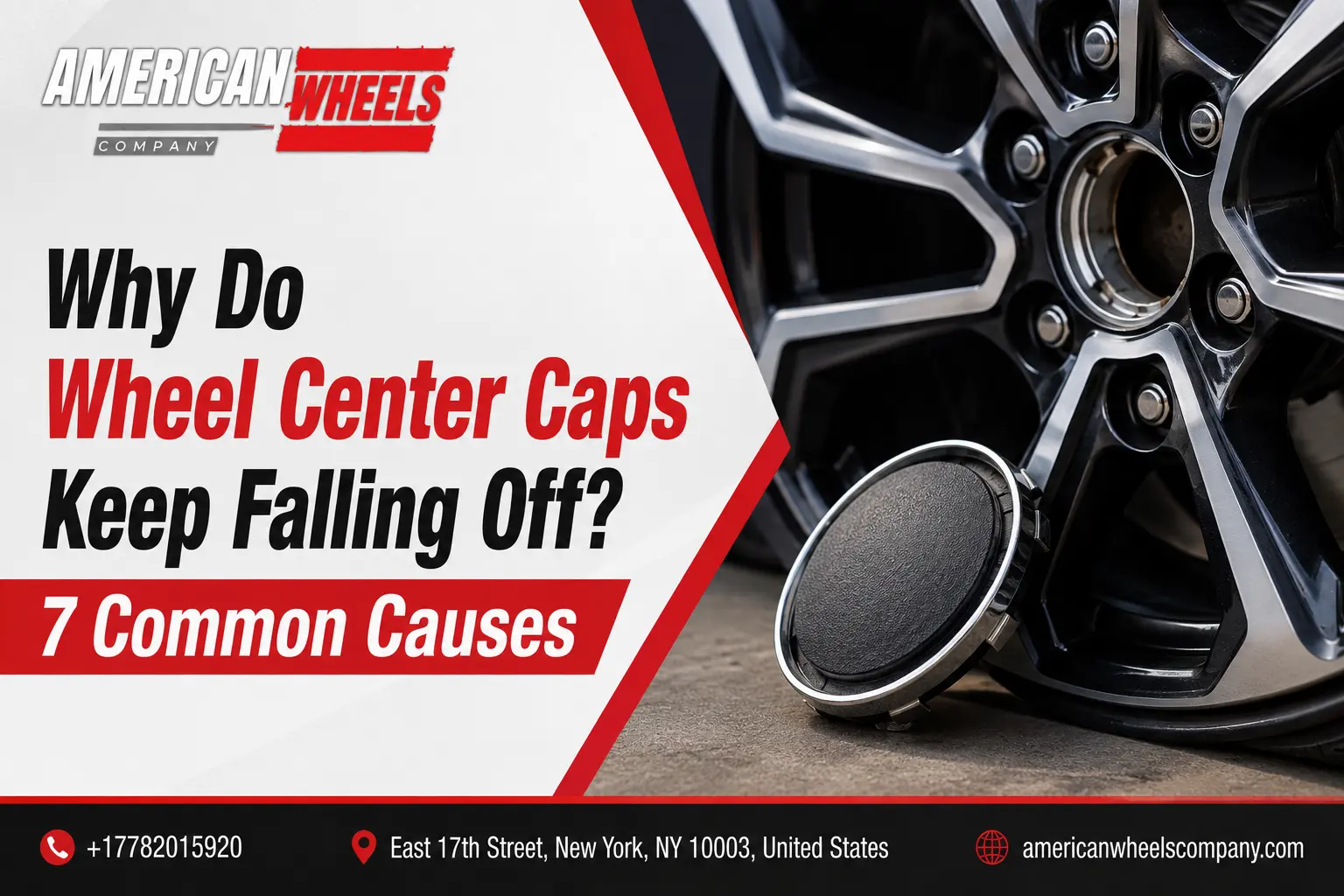
If your wheel center caps keep falling off, the usual cause is a loose or damaged retaining system, a poor fit, or incorrect installation. Age, heat, potholes, and even a damaged wheel can also cause a cap to come loose. The good news is that most cases are easy to diagnose once you know what to check.
A center cap is a small part, but losing one again and again gets frustrating. You replace it, drive for a few days or weeks, and suddenly it is gone. Before buying another replacement, find out why the cap is not staying in place.
Why Do Wheel Center Caps Keep Falling Off?
A wheel center cap stays in place through a specific mounting system. Depending on the wheel, this may use plastic retaining clips, a tension ring, tabs, screws, or another type of fitting.
If that system is damaged, worn, or does not match the wheel correctly, the cap can loosen while you drive.
Here are the seven most common causes:
Problem
What to check
Broken retaining clips
Cracks, missing tabs, or broken plastic
Weak tension ring
Loose or damaged metal ring
Age and heat
Brittle or worn plastic
Wrong fitment
Cap does not match the wheel
Poor installation
Cap is not fully seated
Road impact
Pothole or curb damage
Wheel-side problem
Damaged or worn mounting area
1. The Retaining Clips Are Broken or Worn
The retaining clips on the back of the cap are one of the first things to check.
These clips grip the wheel and keep the cap in place. Over time, they can become brittle, crack, or lose their ability to hold the wheel tightly.
You may notice:
The cap moves when you touch it.
It rattles while driving.
One side sits higher than the other.
The cap comes off with very little force.
One or more clips are cracked or missing.
Heat from the brakes, repeated removal, age, and road use can all contribute to clip failure. Current fitment guides also point to brittle or broken rear clips as a common reason center caps fall off.
What should you do?
Turn the cap over and inspect the back.
If the retaining clips are broken, replacing the cap is usually better than trying to force damaged clips to hold.
2. The Tension Ring Is Loose or Damaged
Some wheel center caps use a metal retaining ring, also called a tension ring or spring ring.
The ring helps create the pressure needed to keep the cap seated in the wheel.
If the ring is:
Missing
Bent
Loose
Damaged
Not sitting in its correct position
the cap may not have enough tension to stay in place.
This is especially important when the cap itself looks fine but still comes loose.
Do not assume the front of the cap tells you everything. Turn it over and check the complete mounting system.
3. Heat and Age Have Made the Cap Brittle
Wheel center caps live in a tough environment.
They deal with:
Brake heat
Cold temperatures
Sun and UV exposure
Water
Road salt
Dirt
Wheel cleaners
Repeated removal and installation
Plastic that was strong when new can become brittle after years of use.
A cap may still look good from the front while the clips on the back have already become weak.
That is why an older cap can suddenly start falling off even if you have not changed anything on the vehicle.
If the cap is cracked, faded, or the mounting tabs look brittle, replacement is usually the better option.
4. You Have the Wrong Center Cap
This is one of the biggest mistakes when buying replacement wheel center caps.
A cap can look right and still be wrong for your wheel.
Center caps are available in many sizes and mounting designs. Even caps that look almost identical can use different clip arrangements or dimensions.
Before ordering a replacement, check:
Wheel brand
Wheel model
Center cap diameter
Mounting style
Retaining clips
Part number, if available
OEM or aftermarket wheel
The center bore is also an important wheel measurement, although it should not be confused with the cap’s own dimensions. The centerbore is the machined opening on the back of the wheel that centers the wheel on the vehicle hub.Tire Rack’s guide to wheel centerbores explains why this measurement matters when dealing with wheel fitment.
American Wheels Company also lists center caps by specific measurements and mounting styles, including snap-on and bolt-on designs. Itswheel center cap includes OEM, aftermarket, custom, and universal options.
5. The Cap Was Not Installed Correctly
A new center cap can fall off if it was not fully seated.
This can happen after:
Tire replacement
Wheel removal
Brake work
Wheel cleaning
Installing a replacement cap
If the clips are not lined up correctly, part of the cap may sit outside the proper mounting area.
The cap might look installed, but it can still be loose.
How to check it
With the vehicle parked safely, look around the edge of the cap.
It should sit evenly inside the wheel. If one side sticks out or you can easily move the cap by hand, remove it and inspect the mounting points before driving.
For snap-in caps, press evenly around the cap rather than hitting one spot hard. Some current installation guides recommend pressing until the retaining clips are fully seated.
If you are not comfortable removing or installing wheel parts, have a qualified tire or wheel professional inspect it.
6. A Pothole, Curb, or Hard Road Impact Loosened It
A center cap can stay in place for years and then disappear after a hard impact.
A pothole, curb strike, or rough road can put extra movement into the wheel. If the cap was already slightly loose, that impact may be enough to push it out.
The important point is this:
The impact may not be the original problem. It may simply expose a weak fit that was already there.
If your cap fell off shortly after hitting a pothole or curb, inspect both the cap and wheel.
Also check the wheel and tire for visible damage. NHTSA recommends regular tire inspections and paying attention to damage after impacts such as potholes or curbs.NHTSA’s tire safety guidance is a useful reference for basic inspection and maintenance.
7. The Wheel Itself Has a Fitment or Damage Problem
This is the cause many people overlook.
If you replace the center cap and the new one also keeps falling off from the same wheel, stop replacing caps for a moment.
The problem may be on the wheel side.
Possible issues include:
Damaged retaining area
Worn mounting surface
Corrosion
Bent or damaged wheel components
Wheel cover or cladding separating
Incorrect wheel and cap combination
Some wheel designs use very specific tolerances to hold the cap. If the wheel’s retaining area is damaged or out of specification, even a good replacement cap may not stay secure.
This is why repeated failure on one specific wheel is worth investigating. A similar issue is documented with friction-fit wheel caps: if caps repeatedly fall off one particular wheel, the wheel’s keeper or retaining area may be outside the required tolerance.
How to Tell What Is Causing the Problem
You do not always need special tools to find the likely cause.
Use these signs as a quick guide:
What you notice
Likely problem
Cap moves easily by hand
Weak clips or poor fit
Cap rattles while driving
Loose retaining system
One cap keeps falling
Wheel or cap fitment issue
Several old caps are loose
Age or material fatigue
New cap falls off too
Wrong fit or wheel-side problem
Cap fell after tire service
Installation problem
Back clips are cracked
Replace the cap
Metal ring is missing
Retaining system problem
If the same wheel keeps losing caps while the other wheels are fine, pay extra attention to that wheel.
How to Stop Wheel Center Caps From Falling Off
Once you know the cause, the fix is usually straightforward.
Check the back of the cap
Do not only inspect the logo or front surface. Look at the clips, tabs, ring, screws, or other mounting parts.
Match the cap to the wheel
Do not choose a replacement based only on how it looks.
Check the wheel brand, model, size, and mounting style.
Make sure the cap is fully seated
A cap should sit evenly in the wheel. If it is loose immediately after installation, do not assume driving will make it tighter.
Inspect the wheel if replacements keep failing
If a second or third replacement falls from the same wheel, have the wheel and mounting area checked.
Check caps after tire service
A tire change or wheel removal means the center cap may have been removed or disturbed. Give it a quick inspection before driving away.
Avoid permanent fixes unless they suit the cap design
You may see people recommend tape, glue, epoxy, or silicone to stop loose caps.
Some sources do mention small amounts of removable adhesive or silicone as an extra-retention method for certain cap designs.
But this should not be your first fix.
If the cap has broken clips or the wrong fitment, adhesive only hides the real problem. It can also make future removal harder.
Fix the fit first.
How to Choose the Right Replacement Wheel Center Cap
If your old cap is damaged or already gone, start with the wheel.
Look for any wheel brand or model markings. If another matching cap is still installed, remove it carefully and check the back for a part number or measurements. You should also measure the cap correctly.
For example, American Wheels Company provides measurement information on its product listings, including outside diameter and other dimensions used to identify the correct cap.
The goal is simple:
Match the replacement to the wheel, not just the vehicle. A single vehicle can have different wheel designs depending on the trim, wheel package, or aftermarket setup.
If you need a replacement,American Wheels Company carries a large range of wheel center caps for different wheel sizes and vehicle brands, including OEM-style, aftermarket, custom, and universal options.
What If the New Center Cap Keeps Falling Off?
If you installed a new cap and it still falls off, check these five things before buying another one:
Is the cap the correct size?
Does the mounting style match the wheel?
Are all retaining clips intact?
Is the tension ring installed correctly?
Is the wheel’s retaining area damaged?
If everything looks correct but the cap still will not stay on, have the wheel inspected.
Buying a third replacement without checking the wheel can leave you with the same problem again.
Is It Safe to Drive Without a Wheel Center Cap?
A missing center cap normally does not affect the basic operation of the vehicle. It is not the same as a missing lug nut or damaged wheel.
However, you should still replace a missing or damaged cap when practical. Depending on the wheel design, the cap helps cover the center area from dirt, moisture, and road debris.
More importantly, if the cap fell off after a hard impact, inspect the wheel and tire instead of assuming only the cap was damaged.
NHTSA recommends regular tire and vehicle checks and paying attention to damage after road impacts.
Conclusion
If your wheel center caps keep falling off, do not assume you simply need another replacement.
Start with the simple checks: inspect the retaining clips, tension ring, fitment, and installation. If the problem started after a pothole or tire service, inspect the wheel and cap closely. And if a new cap keeps falling from the same wheel, the wheel itself may be the reason.
The right replacement should match the wheel’s size, mounting style, and fitment. Taking a few minutes to check these details can save you from losing another cap on the road.
If you need a replacement, American Wheels Company’s wheel center cap collection gives you options across different sizes, styles, and vehicle applications.
Frequently Asked Questions
Why do my wheel center caps keep falling off?
The most common reasons are damaged retaining clips, weak tension rings, poor fitment, incorrect installation, age, and road impacts. If a new cap also falls from the same wheel, inspect the wheel’s mounting area.
How do I keep my wheel center caps from falling off?
First, make sure you have the correct cap for the wheel. Then inspect the clips or retaining ring and make sure the cap is fully seated. If the problem continues on one wheel, check the wheel itself.
Why does my new center cap keep falling off?
The cap may have the wrong size or mounting style, or the wheel may have a damaged retaining area. A new cap should not need to be forced into place.
Are wheel center caps universal?
No. Some are designed for multiple wheel styles, but many center caps are specific to a wheel brand, model, size, and mounting system.
How do I know what size center cap I need?
Start with the wheel brand and model, then check the existing cap’s measurements and mounting system. If possible, use the original part number or compare the back of the old cap with the replacement.
Can I drive without a wheel center cap?
Usually, yes. A center cap is not a structural wheel component. Still, replace it when practical, especially if the missing cap leaves the hub area exposed.
Should I replace the cap or the wheel?
If the cap’s clips or retaining ring are damaged, replace the cap. If several correct replacement caps keep falling from the same wheel, have the wheel and its retaining area inspected before buying another cap.