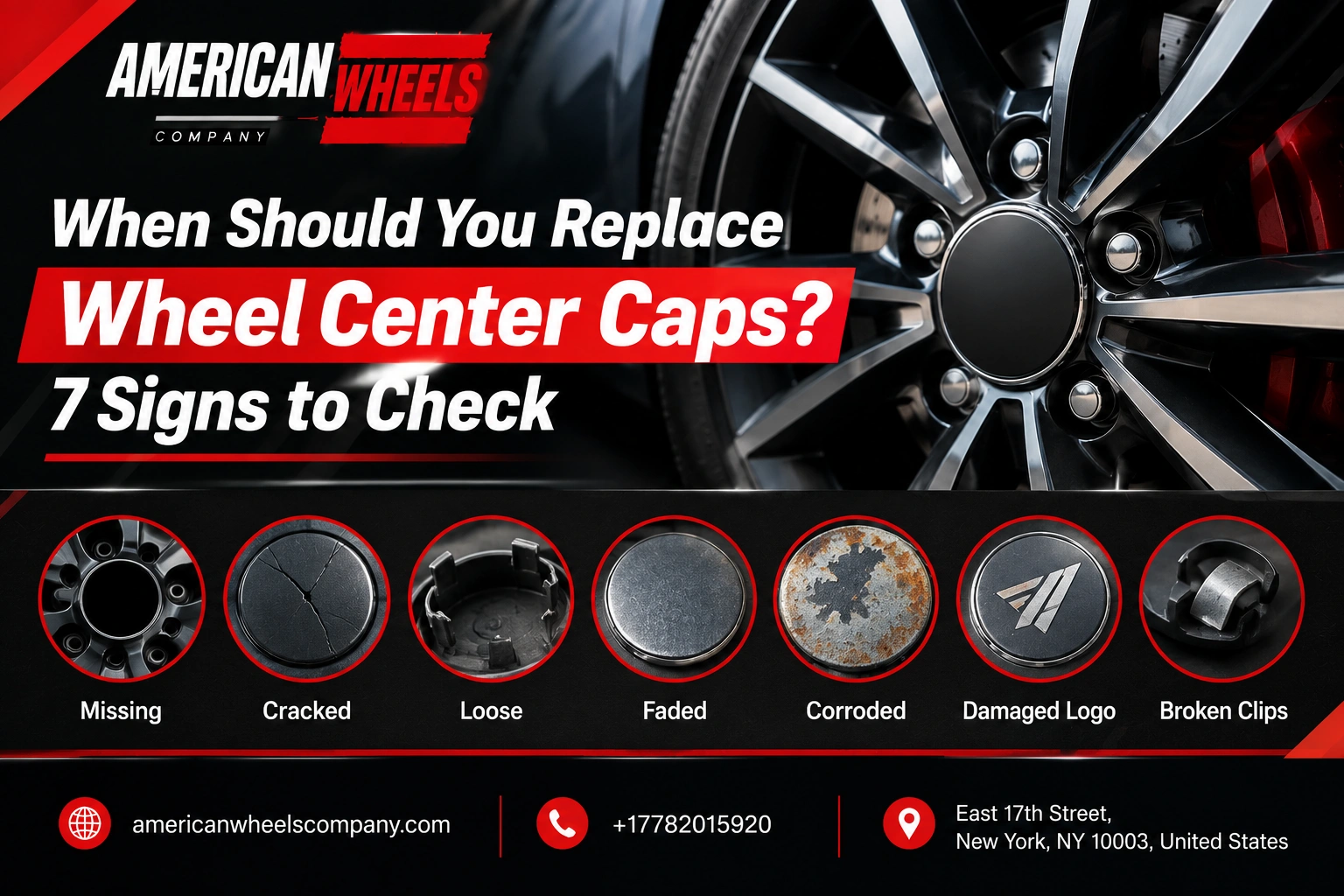
Replace wheel center caps when they are missing, cracked, loose, badly faded, corroded, or no longer stay securely attached. You do not need to replace them on a fixed schedule. Instead, inspect their condition, mounting clips, fit, and appearance. If a cap is structurally damaged or keeps coming loose, replacement is usually the better choice.
A worn center cap may seem like a small issue, but it can make a good set of wheels look old or unfinished. The good news is that you can usually spot the warning signs before the cap disappears from the wheel. Here are the 7 signs that tell you it may be time for a replacement.
When Should You Replace Wheel Center Caps?
There is no set mileage or age when every wheel center cap needs replacement. The right time depends on its condition and fitment.
Sign
Replace It?
Why
Cap is missing
Yes
The original cap is no longer there
Cap is cracked or broken
Yes
Damage can spread or affect retention
Clips or tabs are broken
Yes
The cap may not stay secure
Cap is loose or rattles
Usually
It may have a fitment or retention problem
Finish is badly faded or peeling
Usually
The cap looks worn and may continue to deteriorate
Corrosion or major surface damage
Usually
Damage may worsen over time
Logo or insert is damaged
Depends
You may only need an insert if the cap itself is sound
The important thing is to find the cause before ordering a replacement. A cap that keeps falling off, for example, may have the wrong size or a damaged wheel mounting area rather than a bad cap.
7 Signs You Should Replace Your Wheel Center Caps
1. The Center Cap Is Missing
A missing center cap is the clearest reason to buy a replacement.
Center caps cover the center of the wheel and help keep dirt, moisture, and road debris away from the hub area. They also give the wheel a finished appearance. American Wheels Company offers OEM style, aftermarket, custom, and universal options for different wheel applications.
If one cap is missing but the other three are still in good condition, you do not automatically need four new caps.
First, inspect one of the remaining caps. You may find a part number, wheel brand, or useful measurement on its backside. That information can make finding a matching replacement much easier.
If you need help identifying the correct cap, use the part number and backside details rather than choosing a cap that only looks similar.
2. The Cap Is Cracked or Broken
A cracked cap should not be ignored.
A small surface scratch is mostly a cosmetic issue. A crack around the edge, mounting area, or retaining tabs is different. That type of damage can weaken the cap and make it harder for the cap to stay in place.
Check the entire cap, not just the front.
Look for:
Cracks around the edge
Broken mounting tabs
Split plastic
Damaged retaining points
Missing pieces
A cap that no longer sits flat
If the main body or mounting area is cracked, replacing the wheel center cap is usually better than trying to glue it back together.
A current center cap replacement guide also recommends stopping rather than forcing a cap when the mounting system does not seat correctly, since incorrect fitment can damage clips or the wheel side mounting area.
3. The Retaining Clips or Tabs Are Broken
The clips on the back of a center cap are easy to overlook because you cannot see them when the cap is installed. They are also very important.
Depending on the design, clips, tabs, tension rings, or other retaining parts hold the cap against the wheel. If one is cracked, missing, bent, or badly worn, the cap may become loose.
Do not try to make a wrong cap fit by bending every clip.
If the retention system is damaged, compare the backside with an intact cap from the same wheel set. The number, position, and shape of the clips can help confirm whether you have the correct replacement.
Specialist replacement guidance notes that the rear retention design matters because two caps can look almost identical from the front while using different mounting systems.
4. The Center Cap Is Loose, Rattles, or Keeps Falling Off
A loose center cap is a warning sign that deserves attention.
You may notice that the cap:
Moves when you touch it
Sits crooked
Makes a rattling sound
Spins when it should not
Pops out of the wheel
Keeps disappearing after driving
But do not immediately assume the cap needs replacing.
If the cap repeatedly falls off, the best solution is to find the cause first. Replacing the cap with another incorrect size will not solve the problem.
5. The Finish Is Faded, Peeling, or Discolored
Not every old looking center cap is mechanically bad. Sometimes the problem is simply the finish.
Over time, center caps are exposed to:
Sunlight
Heat
Brake dust
Road salt
Dirt
Water
Cleaning chemicals
You may notice that the logo has faded, the black finish has turned gray, chrome has lost its shine, or the outer coating has started peeling.
If the cap is still secure and structurally sound, mild fading is mostly a cosmetic decision. You can keep using it if you are happy with the appearance.
But if the finish is badly peeling, bubbling, or damaged, replacing the cap can restore a cleaner look.
This is especially worth considering when the other three caps still look good. One badly faded cap can make the whole wheel set look uneven.
6. The Cap Has Corrosion or Major Surface Damage
Corrosion and surface damage are another reason to inspect your center caps closely.
Look for:
Bubbling under the finish
Corroded metal
Deep peeling
Crumbling material
Damaged edges
Severe discoloration
A small mark does not mean you must replace the cap immediately.
The bigger concern is advanced deterioration, especially when it affects the cap’s structure or mounting points.
If corrosion has reached the retaining area, inspect the clips and the wheel side mounting surface as well. A replacement cap only solves the problem if the wheel itself is still in good condition.
7. The Logo or Insert Is Damaged
A damaged logo does not always mean you need a completely new center cap. First, check what is actually damaged.
If only the logo is damaged
Some center caps use a separate badge or insert. In that case, replacing the insert may be possible.
If the cap shell is damaged
If the logo damage comes with cracks, broken tabs, loose mounting points, or a damaged outer shell, replacing the complete cap is usually the better option.
This is why looking only at the front can lead to the wrong decision. The backside tells you much more about the actual condition of the cap.
Do You Need to Replace One Center Cap or All Four?
You do not always need to replace all four.
Replace one when:
Only one cap is missing.
Only one cap is damaged.
The other three are in good condition.
You can find an exact match.
The finish and logo still match.
Replace all four when:
Several caps are damaged.
All four are badly faded.
You are changing the logo or finish.
You want all four wheels to match.
The existing caps are old and showing multiple problems.
For example, replacing one missing cap makes sense when the other three look almost new. But putting one new glossy cap beside three badly faded caps may not give you the look you want.
Can You Repair a Wheel Center Cap Instead of Replacing It?
Sometimes, but it depends on the damage.
Minor scratches
A small scratch or cosmetic mark usually does not require replacement.
Damaged logo
If the logo or badge is separate from the cap body, an insert may be replaceable.
Broken clips or tabs
Replacement is normally the better option when the retention system is cracked or missing.
Cracked cap body
A structural crack is a stronger reason to replace the cap rather than relying on glue.
A specialist replacement guide notes that structural retention damage is different from simple cosmetic damage, and that a repair should not compromise the cap’s designed fit.
The simple rule is. If the damage affects how the cap fits or stays attached, replacement is usually the safer choice.
How to Know You Are Buying the Correct Replacement
Once you decide to replace a cap, the next challenge is finding the right one. Do not choose only by the vehicle year, make, and model.
Check:
Wheel brand
Wheel model
Part number
Outside diameter
Mounting diameter
Cap depth
Clip or tab layout
Retention system
Logo
Finish
The part number is often one of the strongest clues when it is available. American Wheels Company’s matching guide recommends checking the complete part number, front and back photos, measurements, mounting style, and wheel information together rather than relying on one detail.
Remember that the wheel diameter alone does not tell you the correct center cap size. Two wheels with the same diameter can use completely different center caps.
Common Mistakes When Replacing Wheel Center Caps
Buying by vehicle model alone
Your vehicle information is useful, but aftermarket wheels can use different center caps.
Matching only the logo
The same logo can appear on caps with different mounting designs.
Measuring only the front
The rear clips, mounting diameter, and depth can be just as important as the visible face.
Forcing a cap that does not fit
If a replacement needs excessive force, stop and check the fitment. A hammer will not turn the wrong cap into the right one.
Ignoring the part number
If you have an original cap with a readable part number, use it. Keep the full number, including letters and suffixes.
Assuming the center bore is the cap size
The wheel’s center bore and the center cap’s mounting dimensions are not automatically the same.
Replacing one cap without checking the others
If the remaining three are also cracked, loose, or badly faded, replacing them one at a time may not be the best long term choice.
Replace or Keep Your Center Caps? Quick Checklist
Replace the cap if:
It is missing.
The body is cracked.
Clips or tabs are broken.
It keeps falling off.
It rattles or sits loose.
The finish is badly peeling.
Severe corrosion has developed.
The mounting area is damaged.
You may keep it if:
It only has a small scratch.
The logo has minor cosmetic wear.
The clips are intact.
It fits securely.
The cap is not cracked.
You are happy with its appearance.
This simple check can help you avoid replacing a perfectly usable cap while also preventing you from ignoring a cap that is likely to fail.
Final Verdict
You should replace wheel center caps when they are missing, cracked, loose, badly faded, corroded, or no longer fit securely.
You do not need to replace them simply because they are old. Inspect the cap’s condition first, then check the clips, mounting area, part number, and measurements.
If only one cap has failed, replacing one may be all you need. If several are worn or you want a completely matching look, replacing all four can make more sense.
When you are ready to find a replacement, start with the wheel and cap information, not just the vehicle. That is the easiest way to avoid buying a cap that looks right but does not actually fit.
For different replacement, OEM style, aftermarket, custom, and universal options, you can browse the wheel center cap collection at American Wheels Company.
Frequently Asked Questions
How often should wheel center caps be replaced?
There is no fixed replacement schedule for wheel center caps. Replace them when they become missing, cracked, badly worn, loose, corroded, or unable to stay securely attached.
How do I know if my center caps need replacing?
Check for seven main signs: a missing cap, cracks, broken clips, looseness or rattling, severe fading or peeling, corrosion, and damaged logos or inserts. If the damage affects fitment or retention, replacement is usually the better choice.
Can I replace just one wheel center cap?
Yes. If only one cap is missing or damaged and the other three are still in good condition, you can usually replace just that one. Make sure the replacement matches the wheel and existing caps.
Is it safe to drive with a missing wheel center cap?
A center cap is not the part that holds the wheel onto the vehicle, but a missing cap leaves the wheel center exposed and makes the wheel look unfinished. Replacing it also helps restore the intended protection around the center area.
Can cracked wheel center caps be repaired?
Minor cosmetic damage may not require repair at all. But a cracked cap body, broken mounting tab, or damaged retention system is usually a good reason to replace the cap rather than rely on an adhesive repair.
Why do wheel center caps keep falling off?
Common causes include incorrect fitment, broken clips, a missing or damaged tension ring, improper installation, dirt around the mounting area, or damage to the wheel’s retaining surface. Replacing the cap without finding the cause may not solve the problem.
Should I replace all four center caps at once?
Not always. Replace one when only one is damaged and the other three are in good condition. A full set makes more sense when several caps are damaged, all four are badly faded, or you want a matching finish and logo.