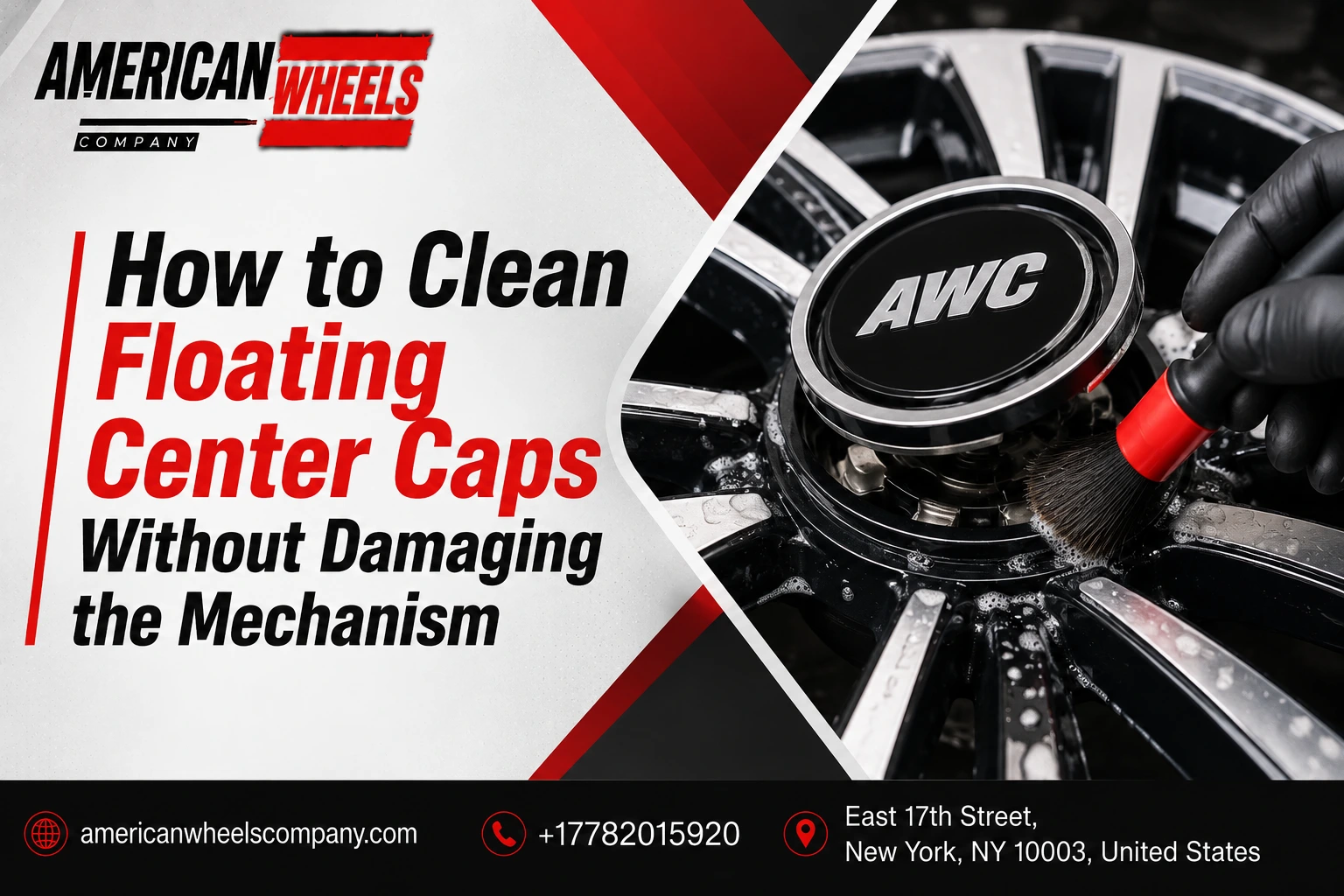
How to clean floating center caps safely is simple: use mild soap or a pH-neutral wheel cleaner, a soft-bristle brush, and a clean microfiber cloth. Clean around the cap gently, avoid abrasive tools and acidic cleaners, and never force water or chemicals into the moving mechanism. Most importantly, do not disassemble the cap unless the manufacturer specifically says it is serviceable.
A floating center cap has more moving parts than a standard cap, so aggressive cleaning can turn a simple wash into a repair or replacement. The good news is that floating center cap cleaning does not need special equipment. A careful hand wash is usually enough to remove brake dust, road grime, and dirt while protecting the finish and self-leveling action.
If you are looking for quality floating center cap options, proper cleaning is one of the easiest ways to keep them looking good for longer.
Why Floating Center Caps Need Special Care
Floating or self-leveling center caps contain a mechanism that allows the logo or badge to stay upright while the wheel rotates. Depending on the design, that mechanism can use a counterweight, bearing, or another moving assembly.
That means the cap should not be treated exactly like a flat, fixed wheel cap.
Dirt, brake dust, moisture, and harsh chemicals can affect the cap’s finish or interfere with its movement. Some designs are sealed and are not intended to be opened or serviced.
A specialist floating center cap care guide also notes that dirt or moisture can contribute to self-leveling problems and recommends avoiding harsh cleaners and direct high-pressure water around the cap seam.
What Happens When Dirt Gets Into the Mechanism?
The most common signs are easy to notice:
The logo does not stay upright.
The cap moves slowly.
The floating action feels stiff.
The logo gets stuck at an angle.
You hear rattling or clicking.
The cap looks cloudy because moisture has entered.
These symptoms do not always mean dirt is the cause. A worn or damaged mechanism can create similar problems.
That is why you should clean first, test, and then inspect rather than trying to force the mechanism to move.
What You Need to Clean Floating Center Caps
You do not need a long list of tools.
Cleaning item
Why you need it
Clean water
Removes loose dirt and cleaner residue
Mild car soap or pH-neutral wheel cleaner
Breaks down road grime
Soft-bristle brush
Cleans around the cap without scratching
Microfiber cloth
Dries and wipes the surface
Clean bucket
Keeps your wash solution clean
Second microfiber cloth
Helps prevent rubbing dirt back onto the finish
Ford’s wheel-care guidance recommends cleaning wheels with cool or lukewarm water and a neutral-pH shampoo and warns against abrasive materials and strong acidic or caustic cleaners.
What Should You Avoid?
Avoid anything that can scratch the finish or push contaminants into the moving parts.
Do not use:
Steel wool
Abrasive pads
Hard brushes
Strong household detergents
Acidic wheel cleaners
Strong solvents
Metal tools
Direct high-pressure water at the cap seam
Unapproved lubricants
Excessive force
If your cap manufacturer provides specific care instructions, follow those instructions first.
How to Clean Floating Center Caps Step by Step
Follow these steps for safe floating wheel center caps maintenance.
1. Let the Wheels Cool
Start with cool wheels.
Do not apply cleaning chemicals to hot wheel surfaces. Heat can cause cleaners to dry too quickly and increase the chance of surface damage.
Ford’s wheel-cleaning procedure also specifically advises against applying cleaning chemicals to hot or warm wheel rims or covers.
2. Rinse Away Loose Dirt
Use clean water to rinse the wheel and floating center cap.
The goal is to remove loose dust and grit before you touch the surface with a brush or cloth.
This matters because rubbing dry brake dust against the cap can create small scratches.
Keep the water pressure gentle around the floating cap.
3. Apply a Mild Cleaner
Use a small amount of mild automotive soap or a pH-neutral wheel cleaner that is suitable for your wheel and cap finish.
Do not assume that a cleaner made for bare metal is safe for every center cap.
If the cap has a painted, chrome, plastic, or coated surface, check the product directions first.
For example, Cadillac accessory guidance recommends a wheel cleaning solution and a soft wheel brush for floating center caps and specifically warns against acidic wheel cleaners.
4. Clean With a Soft Brush
Use a soft-bristle brush to gently clean the cap.
Work around the outside surface first. Use light pressure and let the cleaner loosen the dirt.
Do not aggressively scrub the center logo.
For heavy brake dust on center caps, repeat the cleaning process instead of applying more pressure.
5. Clean Around the Cap Edge
The edge is one of the areas most likely to collect dirt.
Gently work the brush around the gap between the cap and wheel.
Do not push the brush deep into the opening.
You are trying to remove surface contamination, not reach inside the floating mechanism.
6. Rinse Gently
Rinse away the soap and loosened dirt with clean water.
Avoid placing a pressure washer nozzle directly against the cap or its seams.
A gentle stream is enough for normal how to wash floating center caps maintenance.
7. Dry With a Microfiber Cloth
Use a clean microfiber cloth to dry the cap.
Gently wipe the face and edges until no standing water remains.
Drying also lets you inspect the cap closely for:
Cracks
Scratches
Loose sections
Cloudiness
Peeling
Corrosion
Dirt around the edge
Regular inspection is useful because wheel-cap damage can include looseness, discoloration, peeling, or corrosion.
8. Check the Floating Action
Once the cap is clean and dry, check its movement.
The logo should return to its normal upright position according to the design of the cap.
Do not force it back into position.
If it moves smoothly, your cleaning is complete.
If it remains stuck, slow, or tilted, the problem could be inside the mechanism rather than on the surface.
How to Clean Around the Floating Mechanism Safely
This is where many cleaning jobs go wrong.
You should clean around the floating mechanism, not try to clean inside it.
Use a soft brush to remove dirt from the outer edge. Then wipe the area with a damp microfiber cloth.
Do not insert:
Screwdrivers
Picks
Needles
Metal brushes
Cotton swabs deep into the mechanism
Some floating caps are sealed units and are not designed to be disassembled. Crest Accessories, for example, states that its floating center-cap bearing mechanism is factory sealed and does not require routine internal maintenance.
Because floating cap designs differ, manufacturer instructions should always take priority.
Can You Use a Pressure Washer on Floating Center Caps?
You can pressure wash the wheel, but do not aim a high-pressure jet directly at the floating center cap, especially around its seams.
High-pressure water can force water and dirt into areas that normal washing would not reach.
For regular floating center cap cleaning, use a gentle water stream around the cap.
This is especially important if the cap already shows signs of moisture, cloudiness, or a damaged seal.
What Cleaners Are Safe for Floating Center Caps?
The safest general choice is a mild automotive soap or pH-neutral wheel cleaner that is approved for the cap’s surface.
Best Choice
Look for a cleaner that is:
Mild
Non-abrasive
Suitable for coated wheel surfaces
Safe for plastic or painted finishes when applicable
Easy to rinse away
Always check the product label before applying it.
Cleaners to Avoid
Avoid:
Acidic wheel cleaners
Highly caustic cleaners
Abrasive compounds
Steel wool
Strong household chemicals
Unapproved solvents
Ford’s wheel-care instructions warn that chemical-strength cleaners and abrasive cleaning methods can damage wheel finishes over time.
What If Your Floating Center Cap Is Stuck?
A floating center cap stuck in one position needs a careful approach.
First, clean the outside and around the cap edge using the steps above.
Then dry the cap and check its movement.
If the Logo Moves Slowly
Dirt or contamination could be affecting the movement.
Clean the exterior again and make sure the cap is completely dry.
Do not immediately spray lubricant into the mechanism.
If the Logo Does Not Stay Upright
The self-leveling mechanism may be contaminated, worn, or damaged.
A dirty mechanism can cause floating caps to stop self-leveling, but cleaning will not repair a mechanically damaged unit.
If the Cap Rattles
Check whether the cap is loose in the wheel.
Do not continue driving around with a visibly loose or damaged cap. Inspect the retaining tabs and fitment, or have the cap checked.
If Cleaning Does Not Fix It
Stop trying to force the mechanism.
Do not pry open a sealed cap or add random lubricants.
At this point, check the manufacturer’s instructions or replace the cap if the mechanism has failed.
How Often Should You Clean Floating Center Caps?
There is no single cleaning schedule that fits every vehicle.
Clean your floating caps whenever you wash the wheels, especially after:
Heavy brake dust buildup
Muddy roads
Winter road salt
Long road trips
Rainy or dirty driving conditions
A regular gentle wash is better than allowing heavy grime to build up and then using aggressive scrubbing.
Most problems come from trying to clean too aggressively.
1. Using an Acidic Cleaner
A strong cleaner might remove brake dust quickly, but it can damage some cap finishes.
2. Scrubbing With a Hard Brush
A stiff brush can leave scratches on plastic, painted, or coated surfaces.
3. Using a Pressure Washer Too Close
A concentrated jet can push water and dirt toward the mechanism or seals.
4. Using a Metal Tool
Never use a screwdriver or other metal tool to scrape dirt from the cap face or seam.
5. Spraying Lubricant Without Checking the Instructions
A lubricant is not automatically a solution for a floating center cap mechanism stuck because different designs use different materials and mechanisms.
Only use a lubricant if the manufacturer specifically recommends it.
6. Taking the Cap Apart
If the cap is sealed, opening it can damage the mechanism and make the problem worse.
Quick Floating Center Cap Cleaning Checklist
Before you finish, check these points:
Wheels are cool
Loose dirt has been rinsed away
Mild or pH-neutral cleaner was used
Soft brush was used
Cap edges were cleaned gently
No pressure washer was aimed directly at the cap
No abrasive material was used
Cap was dried with microfiber
Floating action was checked
No cracks, looseness, or moisture were visible
If you are comparing floating and standard center caps, remember that the floating design needs a little more attention because it contains a moving self-leveling mechanism.
Final Thoughts
Learning how to clean floating center caps does not require complicated tools or aggressive products. The safest approach is simple: use mild cleaner, soft tools, gentle water, and a microfiber cloth.
Focus on cleaning the outside and edges rather than trying to reach inside the mechanism. Keep high-pressure water, abrasive materials, harsh chemicals, and unnecessary lubricants away from the moving parts.
After cleaning, always check the cap’s floating action and physical condition. If it remains stuck or damaged, stop forcing it and follow the manufacturer’s repair or replacement guidance.
Frequently Asked Questions
How do you clean floating center caps?
Rinse loose dirt with gentle water, apply a mild or pH-neutral cleaner, and clean the cap with a soft-bristle brush. Rinse gently and dry it with a microfiber cloth. Avoid forcing water or chemicals into the mechanism.
Can you use wheel cleaner on floating center caps?
Yes, but choose a cleaner that is safe for the cap’s specific finish. A mild or pH-neutral wheel cleaner is the safer general choice. Avoid acidic or highly caustic cleaners unless the manufacturer specifically approves them.
Can you pressure wash floating center caps?
Avoid directing high-pressure water directly at floating center caps or their seams. Use gentle water pressure when cleaning around the cap.
How do you clean dirt from inside a floating center cap?
Do not try to disassemble the cap just to remove internal dirt. Clean the outside and edges first. If dirt has entered a sealed mechanism and the cap no longer works correctly, follow the manufacturer’s service or replacement instructions.
Why is my floating center cap not spinning?
A floating center cap is designed so its logo stays upright while the wheel rotates. If it stops moving correctly, dirt, moisture, a worn mechanism, or damage could be responsible. Clean the outside first and avoid forcing the mechanism.
Can you lubricate a floating center cap?
Do not add lubricant unless the manufacturer specifically recommends it for that cap. Floating center cap designs vary, and adding the wrong product can create another problem instead of fixing the original one.
How often should floating center caps be cleaned?
Clean them whenever you clean your wheels and whenever noticeable brake dust or road grime builds up. Frequent gentle cleaning is better than aggressive cleaning after heavy buildup.