
How to Measure Wheel Center Caps for a Perfect Fit

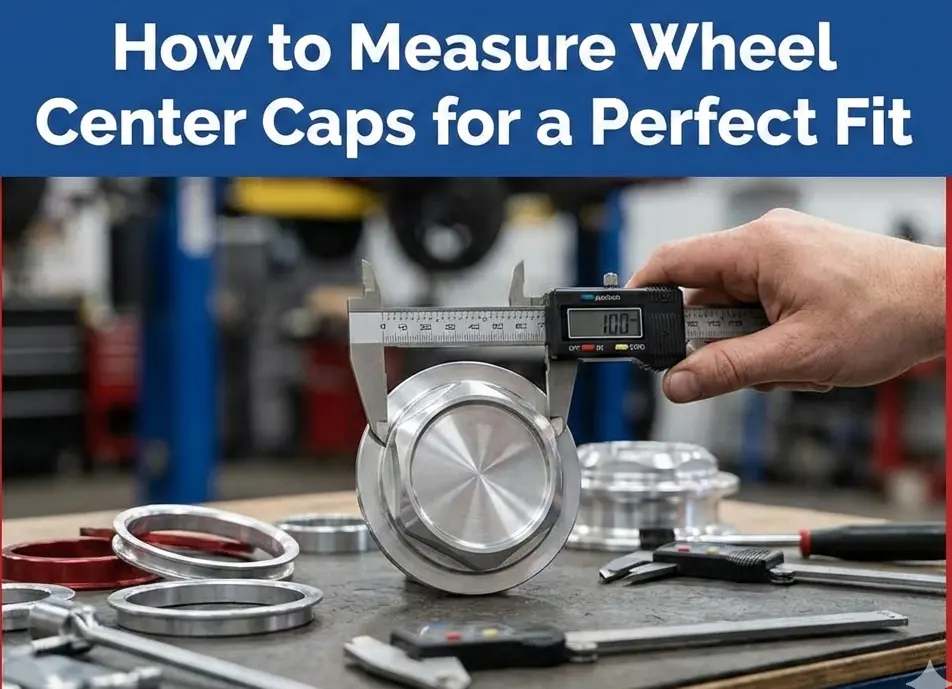
Knowing how to measure wheel center caps correctly is essential when replacing a lost, damaged, or worn cap. Wheel center caps may look like small accessories, but their sizing directly affects how securely they install, how long they stay in place, and how your wheels look once mounted. Even a difference of a few millimeters can mean the cap will not install at all—or worse, it may fall out while driving.
Many drivers assume wheel center caps are universal, but that is not the case. Wheels vary by brand, style, and manufacturing tolerance, and center caps are designed to match specific dimensions. This guide explains how to measure wheel center caps accurately using simple tools, ensuring a proper fit and professional appearance every time.
At American Wheels Company, fitment accuracy is a priority. Whether you are shopping for standard replacements, premium chrome options, or advanced floating designs, understanding proper measurements will help you choose the right product with confidence.
Why Measuring Wheel Center Caps Correctly Matters
Wheel center caps serve both functional and aesthetic purposes. They protect the wheel hub from dirt, moisture, and corrosion while completing the overall look of your wheels. When center caps are incorrectly sized, several problems can occur.
A cap that is too small may not install at all, while one that is slightly too large may snap in initially but loosen over time. This often leads to caps falling out during highway driving, car washes, or sharp turns. Incorrect sizing can also place stress on the mounting clips, causing them to bend or break, which shortens the lifespan of the cap.
For drivers shopping from a dedicated collection of wheel center caps, accurate measurements are the key to ensuring the cap fits securely and maintains a factory quality finish.
Tools Needed to Measure Wheel Center Caps
Learning how to measure wheel center caps does not require specialized equipment. Most measurements can be taken using simple tools available at home or in a garage. A measuring tape or ruler works well for basic measurements, while digital calipers provide higher accuracy for precision fitment.
All measurements should be taken in millimeters. Wheel center caps are manufactured and sold using metric sizing, and converting from inches can introduce rounding errors that affect fitment.
A flat surface is also important to ensure the cap sits evenly while measuring. Uneven angles can produce inaccurate results, especially when measuring depth.
Understanding Wheel Center Cap Measurements
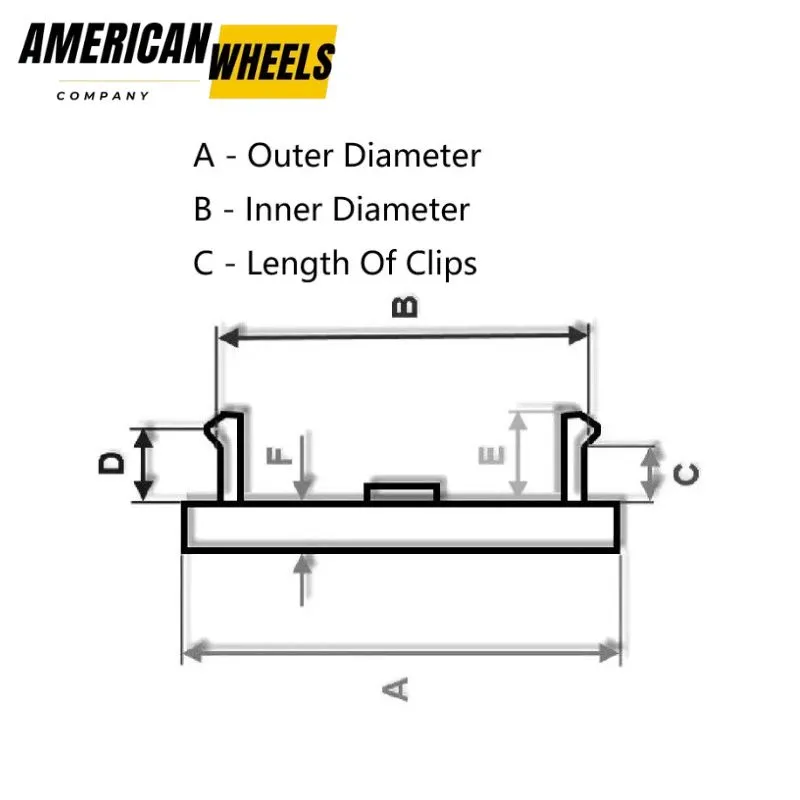
Wheel center caps are defined by three primary measurements: outside diameter, inside diameter, and depth. Each plays a critical role in how the cap installs and performs once mounted.
Outside Diameter (OD) Explained
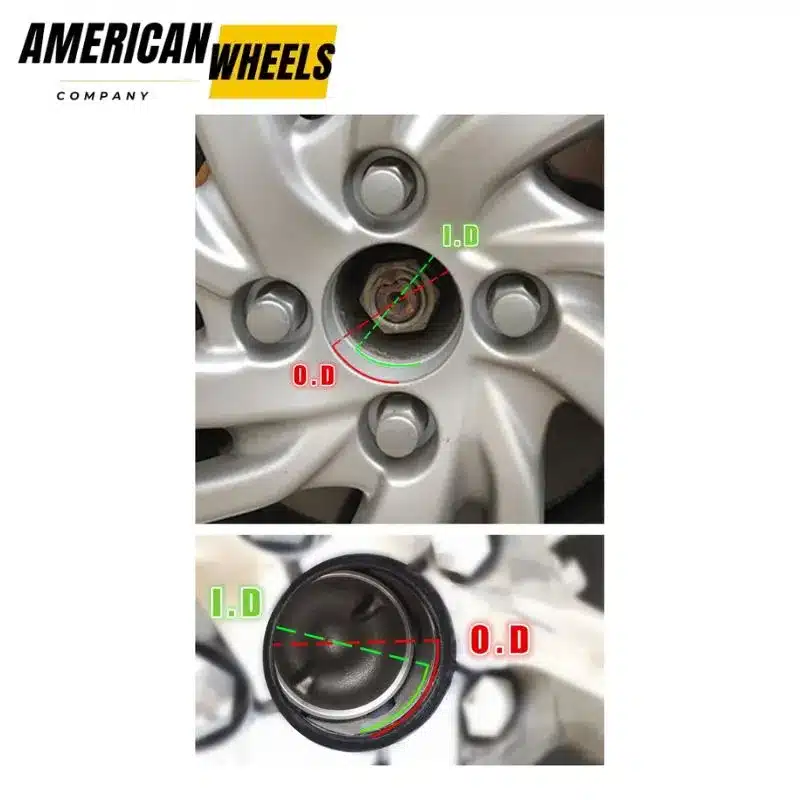
The outside diameter is the total width of the wheel center cap measured across the front face. This measurement determines whether the cap can physically pass through the wheel’s center opening.
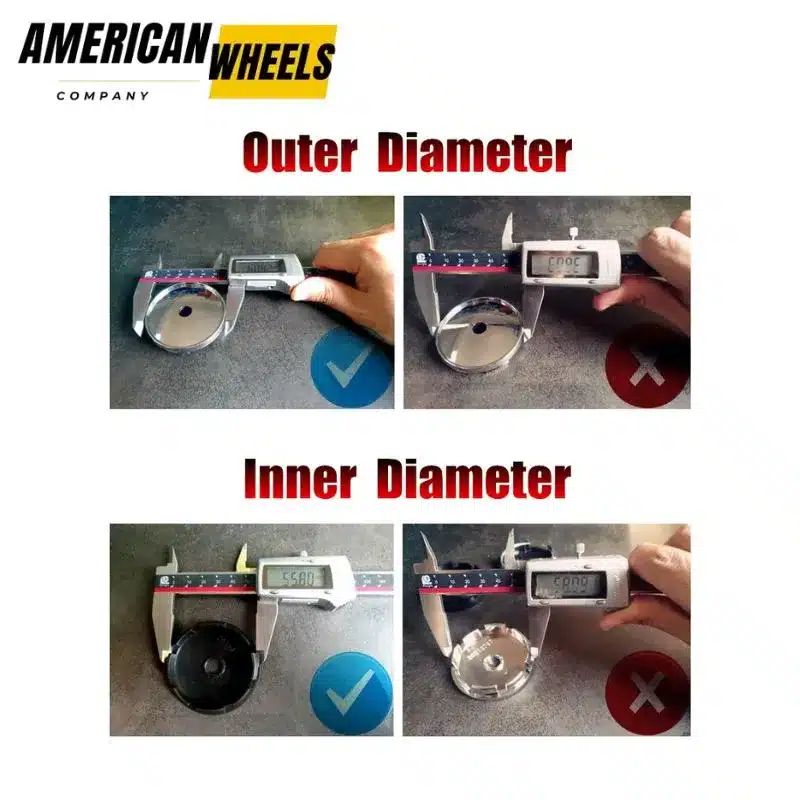
To measure the outside diameter correctly, place the center cap face up on a flat surface. Measure straight across the widest point from one outer edge to the opposite outer edge. This measurement should include the full visible face of the cap.
Outside diameter is especially important for wheels with tight center openings or decorative spokes that limit clearance. Even if the back of the cap fits correctly, an oversized outside diameter may prevent installation entirely.
Inside Diameter (ID) Explained
The inside diameter is the most critical measurement when learning how to measure wheel center caps. This measurement determines how the cap locks into the wheel.
To measure inside diameter, turn the center cap over and measure from one inner edge of the mounting lip to the opposite inner edge. This measurement corresponds directly to the wheel’s center bore opening.
If the inside diameter is too small, the cap will not install. If it is too large, the cap may feel loose or fall out after installation. This is particularly important for specialty designs such as floater center caps, which rely on precise tolerances to function properly.
Depth (Height) Explained
Depth refers to how far the center cap extends inward once installed in the wheel. This measurement ensures that the cap does not interfere with the wheel hub, axle nut, or other components.
To measure depth, place the center cap face, down on a flat surface. Measure from the mounting lip to the deepest interior point of the cap. This measurement is especially important for vehicles with extended hubs or aftermarket wheel spacers.
Incorrect depth can prevent full installation or cause the cap to sit unevenly. In some cases, excessive depth may cause contact with rotating components, leading to noise or vibration.
Measurement Guidelines for Accuracy
When measuring wheel center caps, accuracy is critical. Always remove the cap from the wheel before measuring. Measuring while the cap is installed can lead to incorrect readings due to wheel curvature or obstruction.
Measure the cap itself rather than the wheel opening whenever possible. While measuring the wheel can provide an estimate, the most reliable fitment comes from measuring an existing cap.
Each measurement should be taken more than once to verify consistency. Using millimeters instead of inches helps prevent conversion errors and ensures compatibility with manufacturer specifications.
What Happens When Measurements Are Incorrect
Incorrect measurements are the most common reason customers experience fitment issues with wheel center caps. Caps that are not sized correctly may fail to install, sit crooked, or fall out during normal driving conditions.
Improperly fitted caps can also damage the wheel’s mounting surface or clip channels. Over time, repeated installation attempts with the wrong size can wear down retention points, making even correctly sized caps difficult to secure.
For chrome finishes, incorrect fitment can also lead to scratches or chipped coatings, reducing the visual appeal of the wheel. This is particularly relevant for larger caps such as 146mm chrome center caps, where precision is essential due to their size and weight.
Special Considerations for Floating Center Caps
Floating center caps are designed to remain upright while the wheel rotates, creating a premium visual effect. These caps use internal mechanisms that require extremely accurate sizing to function correctly.
Understanding how floating center caps work helps explain why even small measurement errors can affect performance. If the inside diameter is incorrect or the depth is off by a few millimeters, the floating mechanism may bind, rotate improperly, or fail to stay level.
For this reason, measuring floating center caps should always be done with digital calipers when possible.
How to Measure When the Original Cap Is Missing
If the original center cap is missing, measuring the wheel opening can provide a rough estimate. Measure the diameter of the wheel’s center bore where the cap installs. This measurement can help narrow down size options, but it is not as reliable as measuring an actual cap.
Wheel openings may have slight variations or bevels that affect how the caps seat. Whenever possible, comparing measurements with manufacturer specifications or an existing cap from another wheel of the same set will produce better results.
Installation and Removal Considerations
Once you have confirmed the correct measurements, proper installation is just as important. Press fit caps should be installed evenly using gentle pressure around the perimeter. Avoid striking the cap directly, as this can damage clips or finishes.
If you ever need to remove a cap for measurement or replacement, following the correct process helps prevent damage. Learning how to remove wheel center caps safely ensures that both the cap and wheel remain in good condition.
Why Accurate Measurements Improve Safety and Performance
Wheel center caps may not carry vehicle load, but they play a role in protecting critical wheel components. Properly fitted caps help prevent dirt and moisture from entering the hub area, which can contribute to corrosion over time.
According to guidance from the U.S. Department of Energy, maintaining wheel and hub components contributes to overall vehicle efficiency and longevity, especially in environments with road salt, dust, or moisture. Properly sized center caps support this protection by sealing the hub opening correctly.
Common Mistakes to Avoid When Measuring Wheel Center Caps
One of the most common mistakes is relying on visual estimation instead of measurement. Caps that appear to be the same size can differ by several millimeters.
Another frequent issue is measuring in inches instead of millimeters, then rounding numbers. This can easily result in selecting the wrong size.
Failing to measure depth is another overlooked step. Many caps appear to fit based on diameter alone but fail to seat properly due to insufficient clearance behind the wheel.
Final Thoughts
Understanding how to measure wheel center caps correctly is one of the simplest yet most important steps in ensuring a secure and professional wheel setup. While center caps may seem like minor components, incorrect sizing can lead to repeated replacements, loose fitment, or damage to both the cap and the wheel. Accurate measurements eliminate these risks and help you make confident buying decisions the first time.
By carefully measuring the outside diameter, inside diameter, and depth in millimeters, you ensure compatibility with your wheels and prevent installation issues. Taking a few extra minutes to double, check measurements can save time, money, and frustration—especially when upgrading to premium designs or replacing a missing cap. Precision becomes even more important with specialty options such as floating or chrome center caps, where exact fitment directly affects performance and appearance.
For drivers who value durability, aesthetics, and peace of mind, accurate measurements are the foundation of a clean, finished look. Whether you are restoring factory wheels or customizing your vehicle, knowing how to measure wheel center caps properly ensures the result looks intentional, secure, and professionally installed. Before purchasing your next set, measure with confidence—and choose the right fit from the start.
FAQs: How to Measure Wheel Center Caps
How do I measure wheel center caps correctly?
Measure outside diameter, inside diameter, and depth using millimeters. Always measure the cap itself, not the wheel.
What is the most important measurement for wheel center caps?
Inside diameter is the most critical because it determines how securely the cap fits in the wheel.
Can I measure the wheel instead of the cap?
You can measure the wheel opening if the cap is missing, but measuring an existing cap is more accurate.
Do floating center caps require different measurements?
Yes. Floating center caps require very precise measurements for proper function.
Why do wheel center caps fall out after installation?
This usually happens when the inside diameter is slightly too large or the mounting clips are damaged.
Should I measure in inches or millimeters?
Always use millimeters, as this is the standard sizing format for wheel center caps.